Creating the perfect AI-generated logo starts with a clear, detailed prompt. A well-crafted prompt ensures your logo reflects your brand's identity, avoids generic results, and minimizes revisions. Here's how to refine your AI logo prompts in 5 simple steps:
Every example below is a logo made in Logo Diffusion, shown with the prompt that made it.
Make your logo with Logo Diffusion. Describe it, sketch it or upload an image, then turn it into a layered SVG with Vectorize. Try it for free.
Clear brand goals give you the words your prompt needs. Write them down before you open the prompt box.
Pinpoint your brand's personality to shape its visual identity. Here's a breakdown to help you define it:
| Brand Aspect | Questions to Consider | Design Impact |
|---|---|---|
| Brand Personality | Is your brand serious or playful? | Affects font choice and symbol style |
| Brand Values | What principles guide your business? | Influences color and imagery choices |
| Brand Positioning | Are you modern or classic? | Shapes the overall design approach |
| Target Audience | Who are your ideal customers? | Guides style and complexity decisions |
Then turn each answer into words a prompt can use. "Playful" and "families" become a smiling cartoon character in warm colors. "Serious" and "law firm" become a monogram in dark blue.
Translate your brand's personality into clear, actionable design elements:
1. Color Preferences
Stick to your existing color palette or pick one or two colors that suit your industry. Name them in plain words, like navy blue and gold. Match exact brand color codes later, in the SVG file.
2. Typography Choices
Decide on:
3. Visual Elements
Outline specific details for:
For an engineering firm with a playful streak, those answers become one prompt, with the Line Art style selected:
Cartoon ghost wearing hard hat, friendly smile. 'Oswald' text below. Playful, Engineering themed.
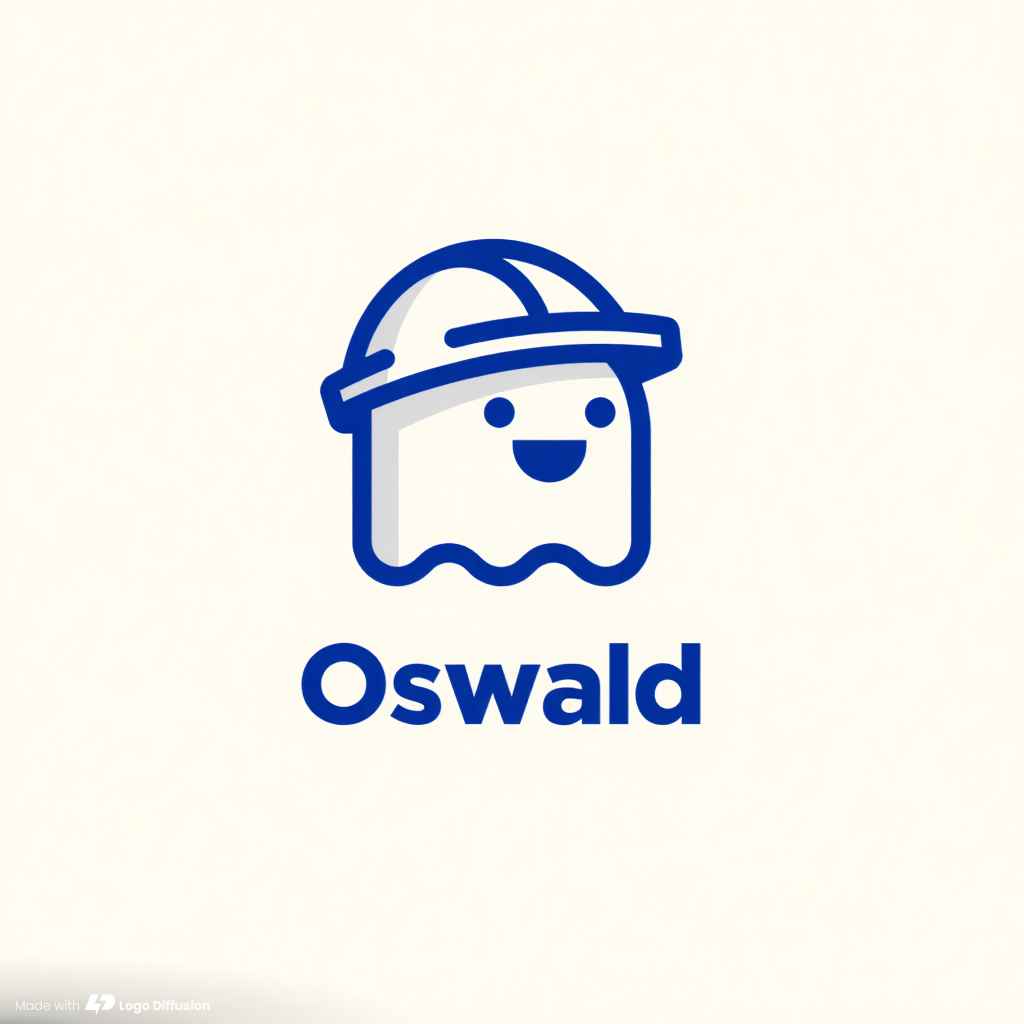
A clear prompt names one subject, one style and the details that matter. Leave the style on Auto and Text to Logo picks a style from your words, or choose one of the 11 logo styles yourself: Pictorial, Mascot, Retro Mascot, Badge/Crest, Cartoon, Logo Type, Abstract, Line Art, Icon/Emoji, Engraved and Monogram.
Good prompts strike the right balance between being specific and easy to understand. Use the following components to structure your prompts:
| Component | What to Write | Example |
|---|---|---|
| Style | One of the 11 logo styles, or Auto | Badge/Crest |
| Subject | One main object, animal or letter | sprouting seedlings inside radiant greenhouses |
| Name | The exact text, in quotation marks | "Verdant Homes" |
| Industry | Who the logo is for | a nature and outdoors business |
| Colors | One or two colors, in plain words | yellow ochre and light green |
Instead of "a modern logo", combine these components into one prompt, with the Badge/Crest style selected:
Showing sprouting seedlings inside radiant greenhouses. Main text: 'Verdant Homes'. Tagline: 'Grow & Thrive'. Crest, Triangular shape, Elegant and Inviting theme and mood, Nature and Outdoors Industry, low detail level. Primary colors: Yellow Ochre and Light Green. Thin Grey outline. Light Grey background.
"A modern logo" leaves the AI to invent the subject, the name and the colors, so every option comes back different. The Verdant Homes prompt leaves it nothing to invent: the subject, the name, a tagline, the mood, the industry, the level of detail and the colors are all written down.
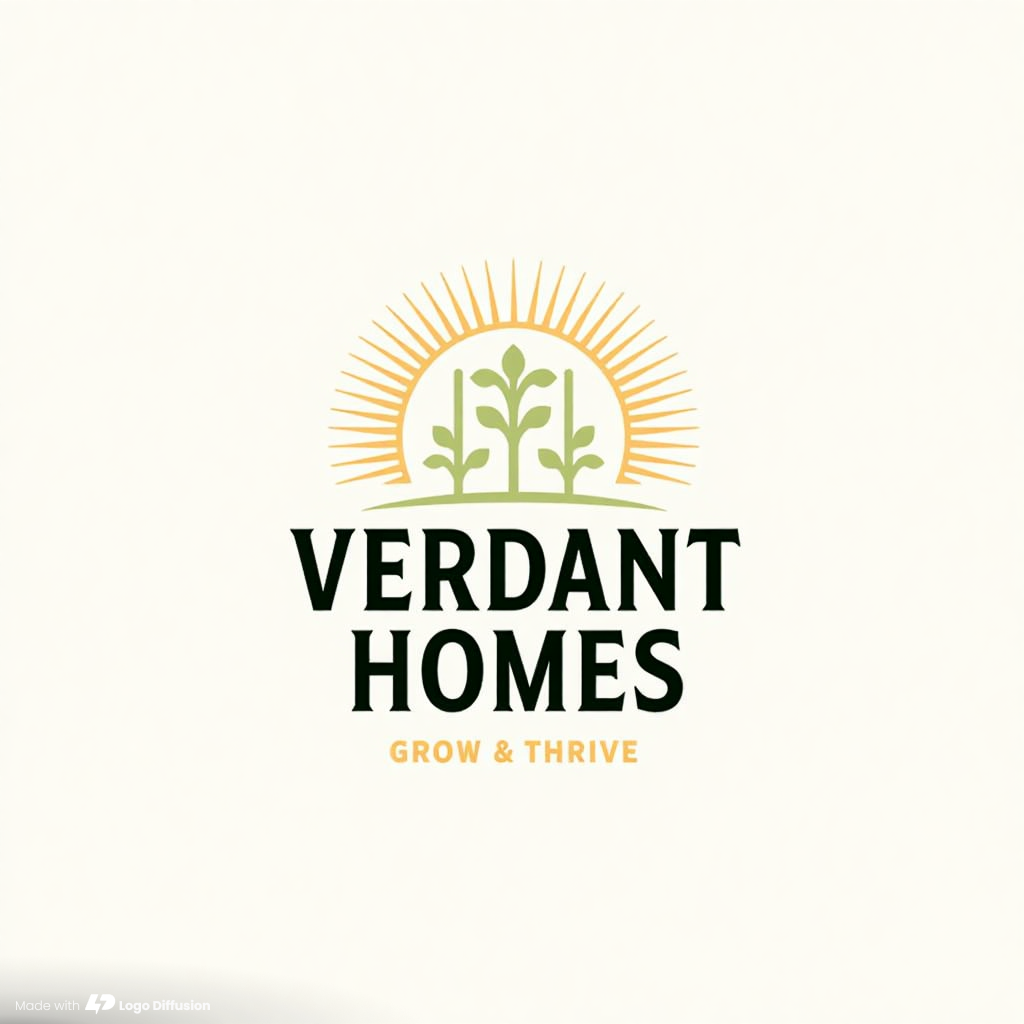
Text inside quotation marks is the name you want in the logo. Check every option for it. When you click Generate, the built-in prompt enhancer rewrites your prompt first. Turn it off to keep your own wording.
Incorporate industry-specific terms and brand values to help the AI create a more accurate design.
1. Industry Keywords
Add terminology that reflects your sector. For example, if you’re in technology, you might use words like circuit, node, signal or cloud. Pick one of them as the subject.
2. Style Descriptors
Choose design terms that match your brand’s personality:
| Brand Type | Effective Style Terms |
|---|---|
| Modern Tech | Sharp, angular, sleek |
| Eco-Friendly | Organic, flowing, natural |
| Luxury | Elegant, refined, sophisticated |
| Creative | Playful, bold, expressive |
3. Technical Requirements
To ensure the logo is practical, include technical details such as:
Take a close look at your first AI-generated logos to identify what works and what needs improvement. Each generation returns 4 options on a paid plan and 2 on the free plan. For example, this prompt, with the Pictorial style selected:
Geometric shield logo with bold sans-serif "STRIKE" text inside. Subtle angular lines suggest motion. Optional red stripe accent.
When evaluating your AI-generated logos, use this framework to assess how well they fit your brand:
| Evaluation Criteria | What to Look For | Common Issues |
|---|---|---|
| Visual Identity | Matches your brand's personality and style | Inconsistent design elements |
| Color Harmony | Follows your brand's color guidelines | Clashing or incorrect color choices |
| Typography | Readable and stylistically appropriate fonts | Mismatched font styles or weights |
| Composition | Balanced and proportional layout | Overcrowded or overly sparse designs |
Be on the lookout for these common technical issues:
To catch these issues, test the logo in different scenarios:
Run those checks on the STRIKE option. At app icon size the shield and its S still read, and the wordmark is the part that goes. In one color it holds, because it is already two flat shapes. On a dark background it was made, so that test is passed before it starts.
If none of the options is close, change the prompt (Step 4). If one is close, edit it (Step 5).
Click Reuse Settings on a generation to load its prompt and settings, then change one thing at a time so you can see what each change did.
Tweak specific elements in your prompt to fix design issues:
| Design Issue | How to Adjust the Prompt | Example Change |
|---|---|---|
| Style Inconsistencies | Pick one style and drop competing style words | "vintage minimalist cartoon logo" → Retro Mascot style, no other style words |
| Mismatched Colors | Name the colors and how many | "blue and white" → "navy blue with white accents, two colors only" |
| Busy Layout | Cut to one subject | "a coffee cup, beans and a mountain" → "a single coffee bean" |
| Unclear Typography | Describe the letters | name only → the name in quotation marks plus "bold sans-serif capitals" |
A prompt that already carries these fixes names one subject, describes the letters and sets the line weight:
Abstract connection symbol left of "kable" wordmark, lowercase geometric sans-serif. Linear aesthetics, clean single-weight strokes.
If your first results miss, change one of these at a time: the subject, the letter description, the colors or the line weight. Run again after each change so you can see what it did.
Ask for one logo per prompt. Other versions, like a wordmark or the symbol on its own, come from Logo System in Step 5.
If words alone are not getting you there, switch methods. Sketch to Logo turns a rough drawing of the layout you have in mind into a logo, and Logo Variations takes a logo you already have and returns 4 variations of it.
Once one option is close, edit it directly.
Download the logo as a layered SVG or as a transparent PNG for screens. Paid plans download unwatermarked files, a 1024px PNG or a layered SVG. Free downloads are 512×512 and watermarked. For print or large formats, use the SVG.
The five steps come down to two habits: describe the brand before you write the prompt, and change one thing at a time after the first results.
For example: Stylized "NEXERA" wordmark featuring interconnected, sharp-edged geometric shapes that evoke innovation and forward motion. One name, one kind of shape, one mood.
More prompt examples are on the Logo Diffusion blog.
There is no set number. Each generation returns 4 options on a paid plan and 2 on the free plan, and a new round brings new options, not a tweak of the old ones.
Change one part of the prompt per round, such as the subject, the words that join two ideas, the style or the colors, and keep every other word as it was. Then the difference you see comes from the part you changed. Reuse Settings on a generation loads its prompt, style and settings, so the next round starts from the same input.
When one option is close. Another prompt round gives you new options and can lose the one you liked. Make the last changes on that logo instead: the Magic Editor edits it from a text instruction, 5 credits at Base quality, the default, and Logo Variations gives you versions of a logo you pick.
Every generation is a new set of options, so even the same prompt comes back different. With the style on Auto, Text to Logo picks a style from your words, so a new word can bring a new style. The prompt enhancer, on by default, also rewrites your prompt before it generates. Pick a style and turn the enhancer off while you test single changes.
Text to Logo is 2 credits per image: 8 credits for a paid generation of 4 options, 4 credits for a free one of 2. The free plan has 24 credits, refilled weekly, enough for up to 12 logos per refill.
Ali Rahmoun is a brand designer and 3D illustrator who has been building logos and brand identities since 2006. In 2016 he founded Sports Templates, whose branding and uniform templates have been used by the Pittsburgh Steelers, the Minnesota Timberwolves and ESPN, where he also worked on custom 3D graphics. In 2023 he founded Logo Diffusion, training its AI models on his own branding projects and on what makes a logo work: clean shapes, strong type and a file you can actually use. He writes here about logo design, branding and how to get professional results from AI without handing over the creative decisions.