

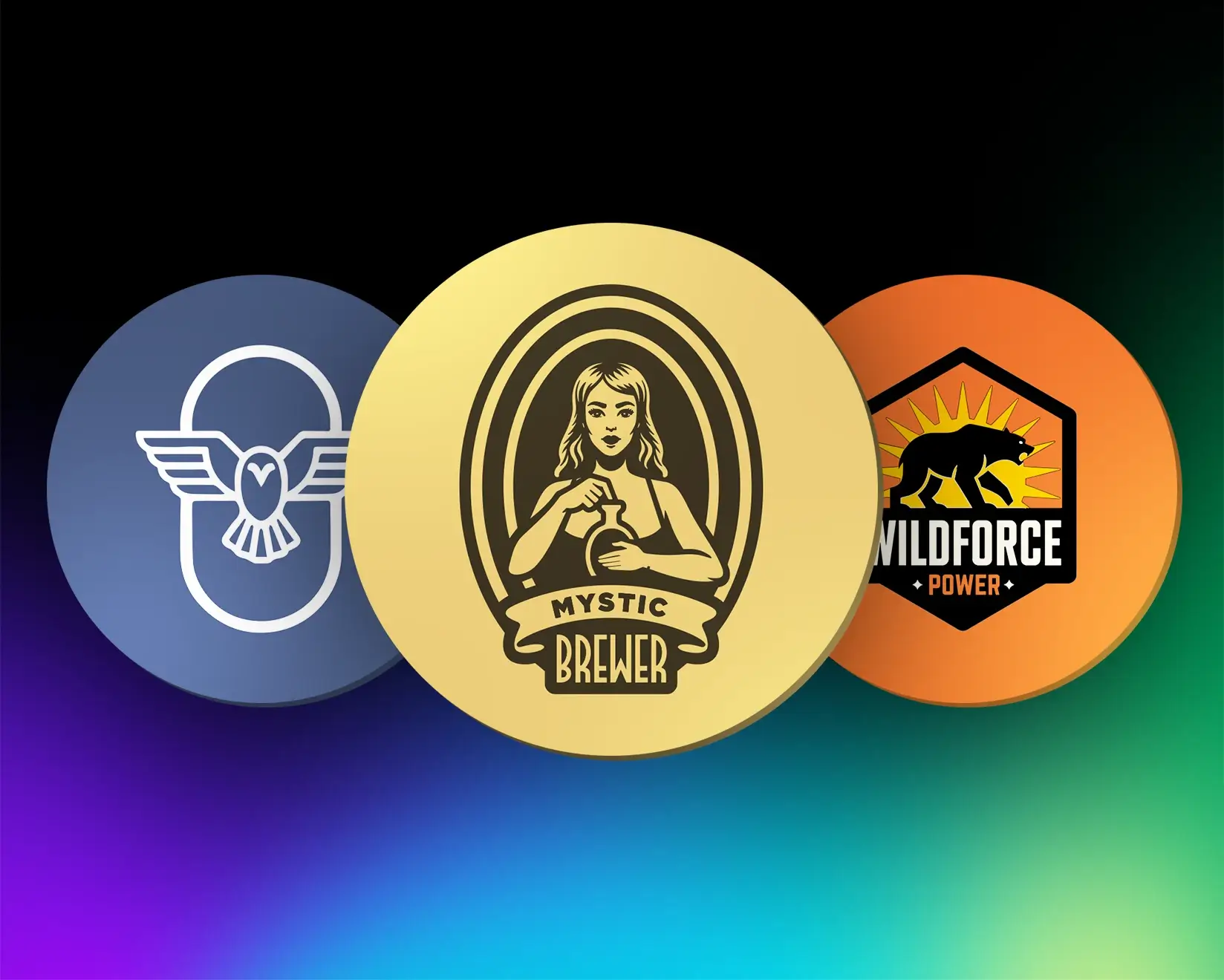

Looking to create a professional, custom badge logo without complicated design tools?
With Logo Diffusion V5, you can design clean, one-of-a-kind badge and crest logos in just a few minutes — even if you have zero design experience.
Prefer video? Watch the full YouTube tutorial here:
Gathering Ideas and Setting the Mood (optional)
Every great logo starts with a strong concept. For the first badge, we’re creating a vintage-style black and white logo — something with a nostalgic, mythic feel, like you'd find on an old tea company's packaging. We’ll gather inspiration on Pinterest, focusing on elements like oval shapes, vintage fonts, and detailed illustrations.
Once the moodboard is ready and the idea is clear, let's head into Logo Diffusion.

In the Text-to-Image workspace, select the "Badge/Crest" style.


We'll start with a simple prompt: "A woman with curly hair mixing a magical potion, detailed badge, "Mythic Brewer" text."

Click "Enhance Prompt" to automatically refine the description and adjust the style settings. This already gives a strong setup, but to match the exact vision, we’ll tweak a few settings manually: clearing the color palette, choosing a black outline with a white background, selecting an oval shape, setting the style to "Illustrative," and picking nostalgic and whimsical moods.

After generating the first batch of logos, let's pick the closest match — but we’re not stopping there. To fine-tune it even further, let's set the favorite version as the input image.


Freezing the prompt ensures that the AI keeps the original idea intact without reinterpreting it again.

Then, by adjusting the image strength to around 4 and freezing the seed, we let Logo Diffusion create slight variations that stay close to our favorite design without drifting too far.

This gives us a new polished options to choose from.

After a few quick tweaks, we’ll have the perfect version ready for export as a professional SVG vector file. The file is clean, grouped, and easy to edit — even if it's your first time opening a vector program.


Creating a Minimalist Owl Badge
Now let's switch things up and create a minimalist badge for an educational app. Clear the previous prompt and type: "Minimalist owl in flight inside a badge, wings spread, soaring upwards." Click "Enhance Prompt," then tweak the settings: choose a modern/minimalist style, select an oval shape, pick clean and natural moods, and stick with a black-and-white color palette.

After generating, once we find a version that nails the idea, we freeze the prompt again. Freezing it locks in the exact structure and vibe we like, making sure that when we tweak things like colors, the AI doesn’t rewrite anything behind the scenes.

Next, we swap the outline and background colors to create a fresh look (white outline, blue background). Setting the chosen version as the input image and adjusting the image strength to 5 keeps the result close to the original, while freezing the seed ensures consistent variations. This way, we can focus purely on visual fine-tuning without worrying about unexpected changes.

Bring Your Badge Ideas to Life
Logo Diffusion V5 makes it easier than ever to create original, production-ready badge logos. From moodboarding and idea gathering to style selection, prompt freezing, small edits, and final vector export, you’re fully in control of the creative process.
Start experimenting with your own badge logos today and see how fast you can bring your ideas to life with Logo Diffusion!
Happy designing!

Elevate Your Brand with the Ultimate AI Logo Maker
Built with love by designers for designers!


Trusted by over 200k+ users


The future of AI Logo Design
