.webp)

Your logo style shapes how viewers read your channel before they ever click a video. It sets the tone instantly — whether you're fun, serious, chaotic, educational, or something in between. Since YouTube is visual, the style you choose influences how people feel about your content from just a tiny icon.
A good logo style also creates consistency across thumbnails, banners, intros, and profile images. When everything matches, viewers recognize you faster, which helps your channel feel more “put together” even if you’re just starting out.
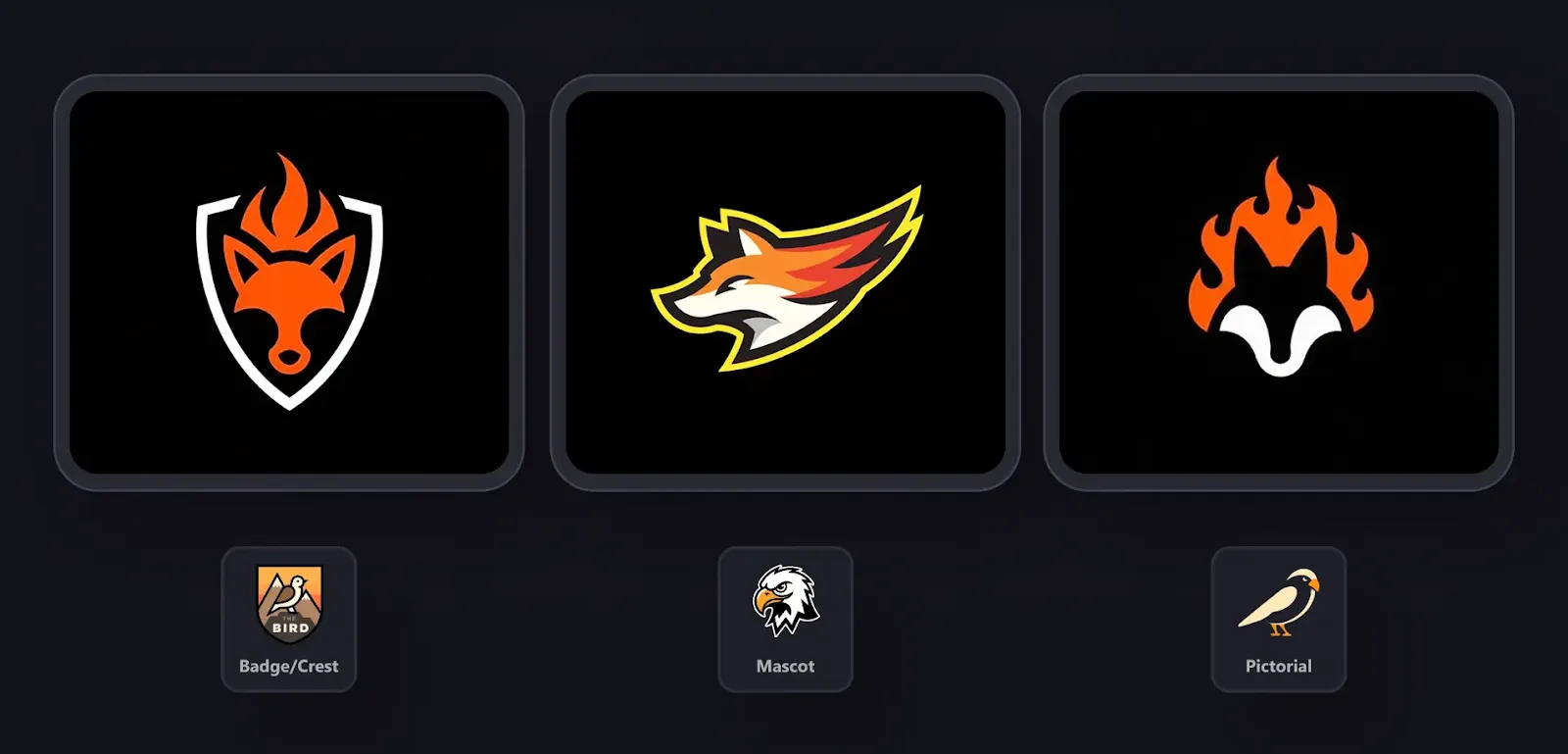
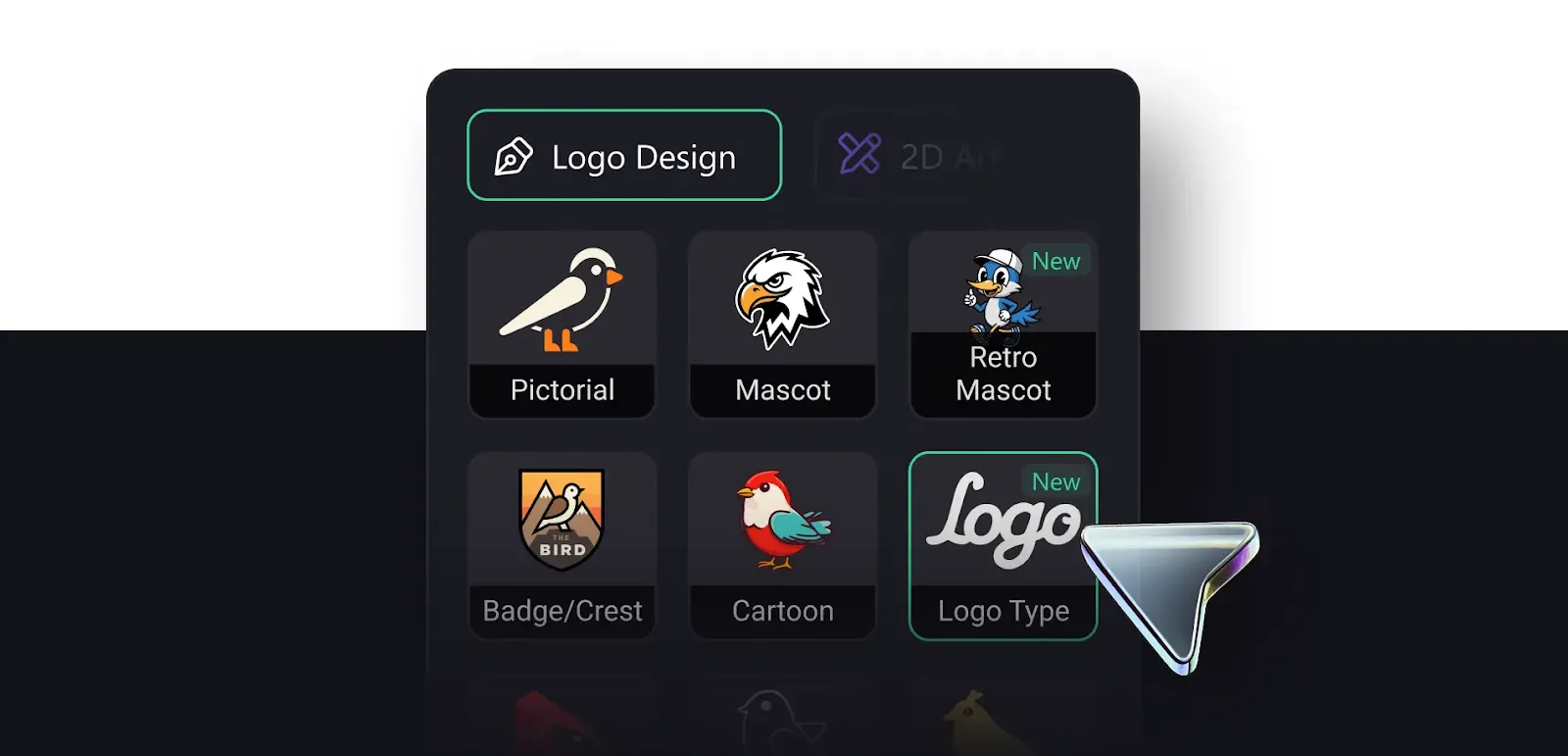
Here are some of the styles creators use most often:
1. Mascot
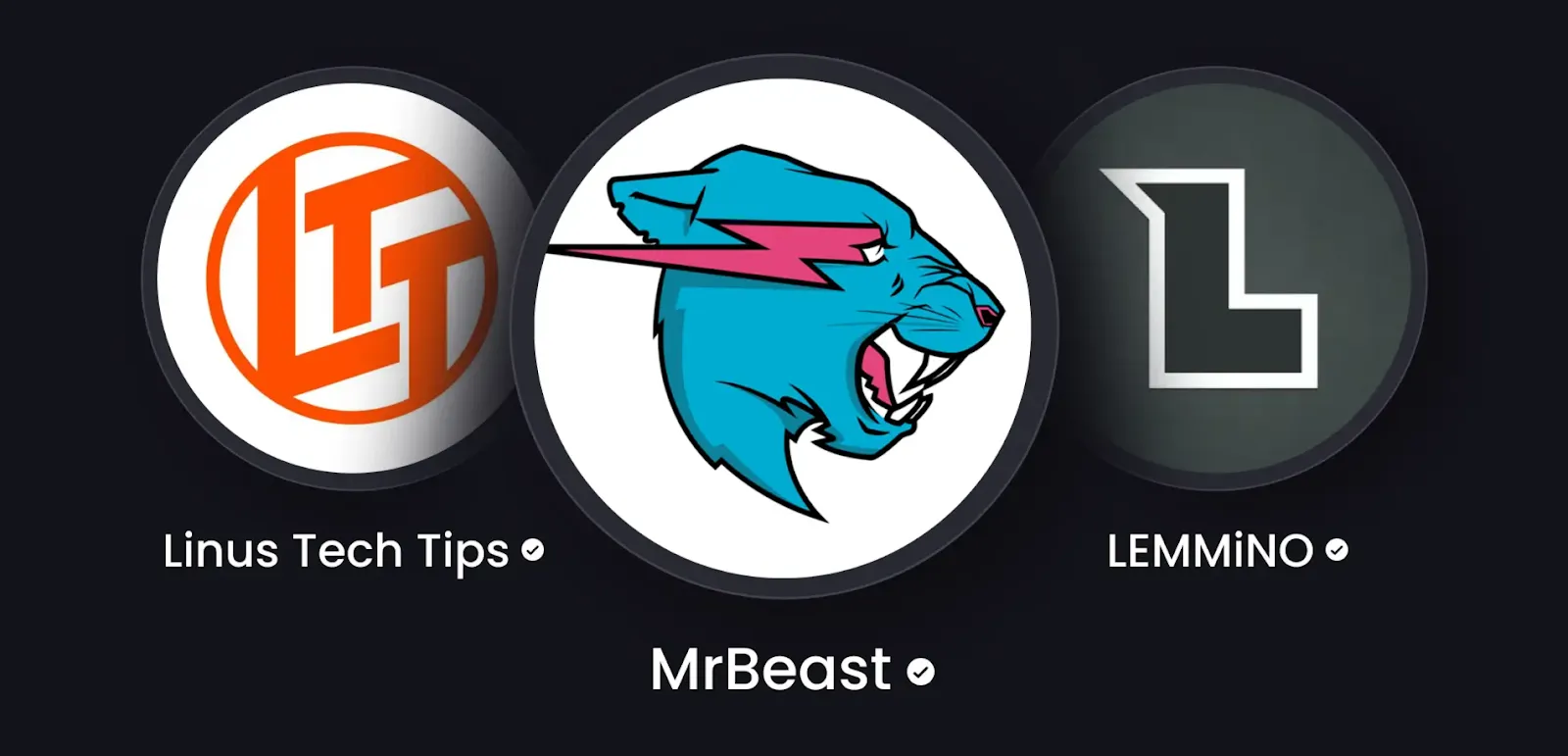
Character-based logos built around expressive animals, creatures, or illustrated figures. They stand out easily and carry a clear personality. Think of channels like MrBeast, where the illustrated character becomes part of the identity.
2. Badge / Crest (Check out this badge/crest guide.)Logos built inside defined shapes or emblems. They feel structured, symbolic, and visually complete. A simple example is Outdoor Boys, whose badge-like mark reflects a sense of adventure and storytelling.
3. Logotype
A text-focused logo built from typography. It doesn’t always have to be minimal — logotypes can be simple or complex — but the focus is always on letterforms rather than icons.
4. Monogram
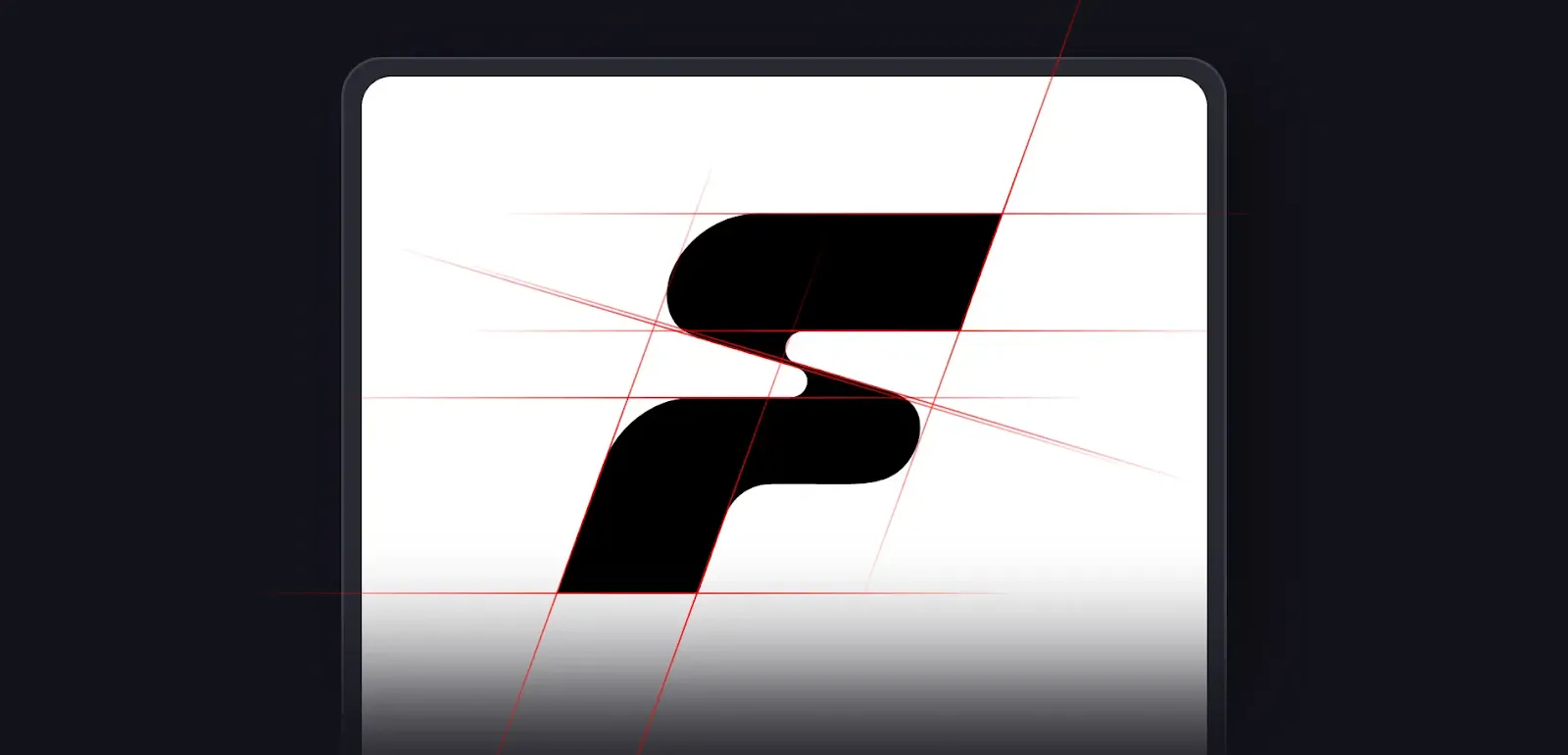
A minimal, letter-based logo using one or two initials. Strong silhouettes make it easy to recognize instantly, even when it’s only a few pixels tall.
5. Pictorial
A simple icon or symbol that represents an idea or object. Direct, clear, and great for channels that want an immediate visual hint of their theme.
6. Cartoon
Illustrated logos with soft lines, expressive forms, and friendly shapes. They often feel approachable and fun.
7. Engraved
Detailed linework with fine shading or cross-hatching. This style has a textured, crafted look that stands out because of its detail, even when simplified.
Logo Diffusion can generate all of these styles, letting you explore different directions quickly without having to redesign everything manually.
The AI models on Logo Diffusion work well for logos because each style is trained in extreme detail. The system learns real logo design rules, color relationships, shape structure, and how a style should behave. This lets it generate results that stay consistent, clean, and usable without feeling random or chaotic.
If you’re unsure what style to pick, start by looking around your niche. You don’t have to copy anyone, but it gives you a sense of what viewers expect:
• Gaming channels often use mascots or bold icons
• Outdoor or adventure channels use badges or crests
• Education and tech channels often lean toward logotypes or monograms
• Animation or storytelling channels use cartoon-style marks
• Commentary channels usually go for minimal, clean text-based designs
Then generate several styles and compare how each one feels with your channel name. The best style is the one that matches the personality you want your channel to have.
If you’re stuck between options, run a few completely different styles and see which one clicks instantly. That’s the benefit of AI — you don’t have to commit blindly.
You can start with a simple universal prompt like:
“Logo for a relaxing productivity channel called Calm Desk.”
This prompt works for any style — mascot, monogram, pictorial, logotype, cartoon, badge, anything. Change “relaxing productivity channel” with your niche and choose the style inside Logo Diffusion. If you don’t want a channel name yet, remove it and keep only the concept.
Seeing your idea across multiple styles makes the decision much easier.
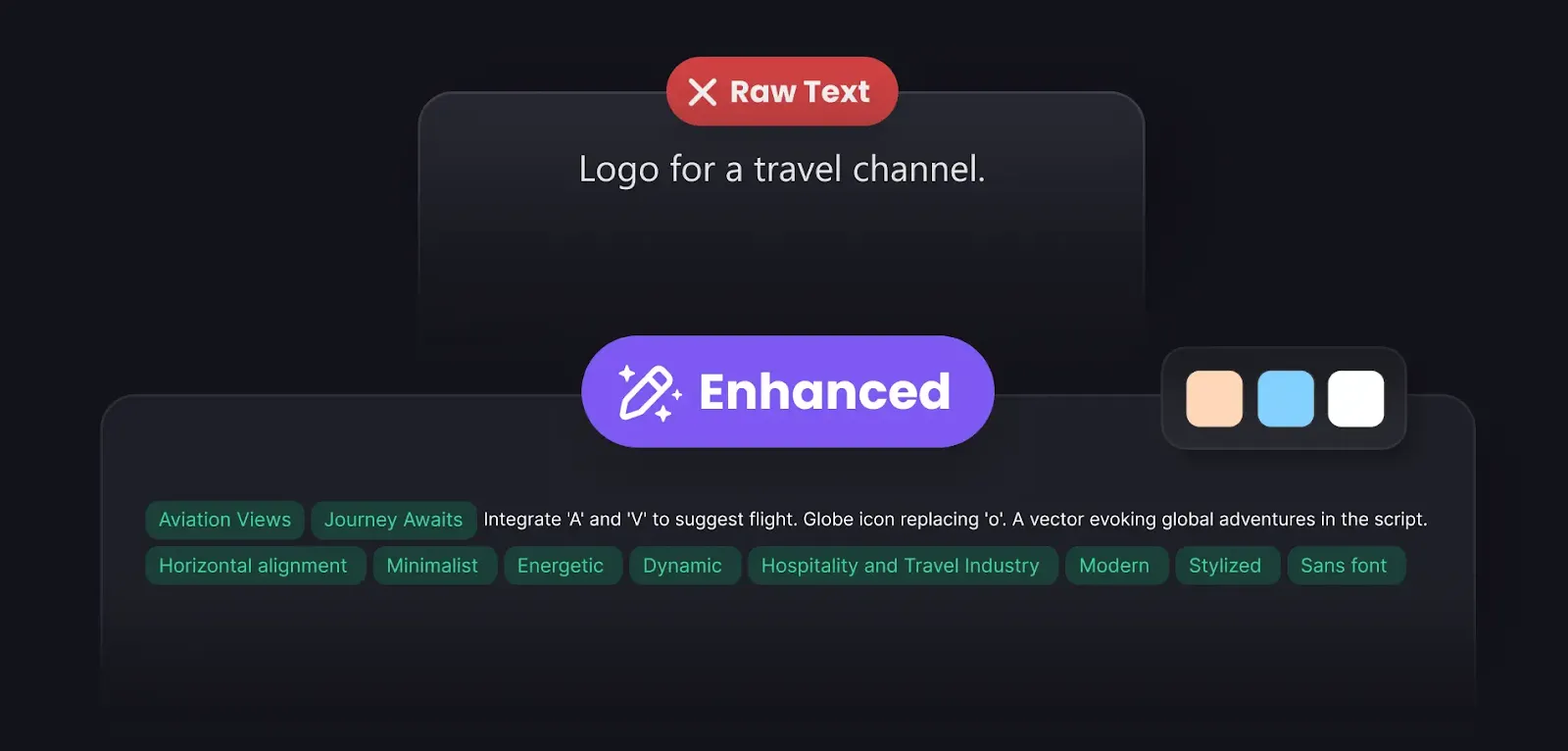
A few extra details can instantly make the idea clearer for the AI. Here’s an example:
Simple Prompt:
“Logo for a travel channel.”
Enhanced Prompt:
“Integrate 'A' and 'V' to suggest flight. Globe icon replacing 'o'. A vector evoking global adventures in the script.”
Mascot Style:
“Logo for a high-energy gaming channel called Pixel Panther.”
Logotype Style:
“Logo for a productivity channel called Focus Flow.”
Pictorial Style:
“Logo for a travel channel called Globe Trails.”
Ethan Brookes is a product-focused content writer covering AI tools, branding, and SaaS workflows. He writes practical guides on using AI for real-world design and product use, with a focus on brand-ready outputs and scalability.






.webp)

.webp)
.webp)